Health and Safety Policy — Gardeners Hainault
 Gardeners Hainault is committed to maintaining the highest standards of health, safety and welfare for all staff, clients, contractors and members of the public who may be affected by our gardening and grounds maintenance activities. This policy outlines our approach to risk management, safe working practices and environmental stewardship. Our aim is to deliver quality horticultural services while preventing harm, minimising incidents and promoting a safe working culture.
Scope: This policy applies to all employees of the company, temporary workers, volunteers and any subcontractors engaged to perform landscaping, mowing, planting, pruning, pest control and general garden maintenance across our service area. It also covers work undertaken on private gardens, communal grounds and small commercial sites. Key elements include hazard identification, risk assessment, training, provision of appropriate protective equipment and procedures for reporting incidents and near-misses.
 Responsibilities: Clear roles and responsibilities are defined to ensure accountability. Managers will ensure that risk assessments are current and that safe systems of work are implemented. Supervisors will monitor compliance and provide on-site instruction. Employees and operatives are required to follow safe practices, attend training and report hazards. The following responsibilities are emphasised:
- Management: setting policy, allocating resources and ensuring legal and ethical compliance.
- Supervisors: enforcing safe methods, conducting toolbox talks and recording inspections.
- Workers: using PPE, operating equipment safely and reporting defects.
Hazard identification and risk control: Routine tasks in gardening can expose people to a range of hazards including machinery, chemical products, manual handling, slips and trips, working at height and biological risks. We use documented risk assessments to identify control measures such as elimination, substitution, engineering controls, administrative controls and personal protective equipment (PPE). Equipment maintenance, guarding, and safe storage of tools and fuels are standard practices to reduce risk.
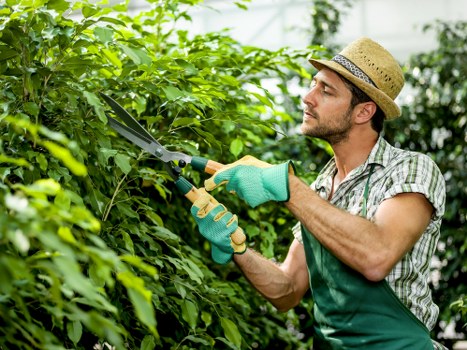 Training and competence: Employees are provided with adequate induction and ongoing training relevant to their role. Training covers safe use of petrol and electric powered tools, chainsaw and hedgecutter operation where applicable, pesticide handling and application when required, and correct manual handling techniques. Training records are kept and reviewed to ensure competence. Refresher training is scheduled periodically and when new equipment or processes are introduced.
Emergency arrangements and first aid: We maintain clear procedures for responding to incidents, including first aid provision, emergency contacts and evacuation routes for multi-site work. A stock of first aid kits is kept in vehicles and at central depots, and designated first-aiders are identified. In the event of an incident, employees must secure the scene, provide first aid within competence, report the event and cooperate with any follow-up investigations.
Safe systems of work: Written procedures and method statements are developed for higher-risk tasks such as tree work, ladder use, confined spaces in landscaping features and working adjacent to traffic or public thoroughfares. Permit to work style controls are applied where appropriate and vehicles carrying equipment are operated in accordance with best practice. Manual handling assessments are used to plan lifts and reduce injury.
 Contractor and visitor management: When contractors are engaged to supplement our workforce, they must comply with this policy and provide evidence of their own safety arrangements. Visitors and clients who are on-site during work are protected by clear signage, cordons and direction to safe areas. Lone working is managed through check-in procedures, appropriate communication devices and risk-based controls for isolated tasks. Young workers and vulnerable persons are provided with additional supervision and adapted tasks where necessary.
 Monitoring, audit and continuous improvement: Health and safety performance is monitored through regular site inspections, equipment checks, incident analysis and periodic audits. Near-miss reporting is encouraged to identify trends before harm occurs. Records of training, inspections and incident reports are maintained and reviewed to drive improvements. Senior management conducts an annual review of this policy to ensure it remains relevant to the changing nature of our horticultural services across the area where we operate.
Specific controls for common gardening hazards
- Machinery and power tools: routine maintenance, correct guarding, and operator training.
- Chemicals and pesticides: secure storage, use of COSHH-style assessments, and PPE where needed.
- Biological hazards: awareness of allergens, insect bites, and measures to reduce exposure to ticks and plant-related irritants.
Reporting and record keeping
All incidents, injuries and near misses must be reported promptly. Records are used to meet statutory obligations and to inform risk reduction measures. Confidentiality is respected for any medical information, and records are retained according to company policy to inform training and prevention activities.Commitment statement: The leadership of Gardeners Hainault endorses this policy and commits to providing the necessary resources to maintain a safe working environment. We expect every team member to contribute to a positive safety culture by following procedures, using equipment responsibly and raising concerns without delay. This policy will be communicated to all employees and made available on request. Regular review and active participation from all staff will ensure that our gardening services continue to be delivered safely and professionally.

